when is the Best time TO SEE THE northern lights in lapland?
The Northern Lights can be seen in Finnish Lapland from late August until early April whenever the sky is sufficiently dark and clear. March and early April generally offer the best overall balance of darkness and weather, while September, October and February are also excellent choices. No date can guarantee a sighting: cloud cover, local conditions and the number of available nights matter more than the month alone. Learn about ideal conditions, the solar cycle, and how to boost your chances of witnessing this breathtaking Arctic phenomenon.
Updated on 28 August 2026 by the Nordic Odyssey team.
1. WHAT ARE THE NORTHERN LIGHTS?
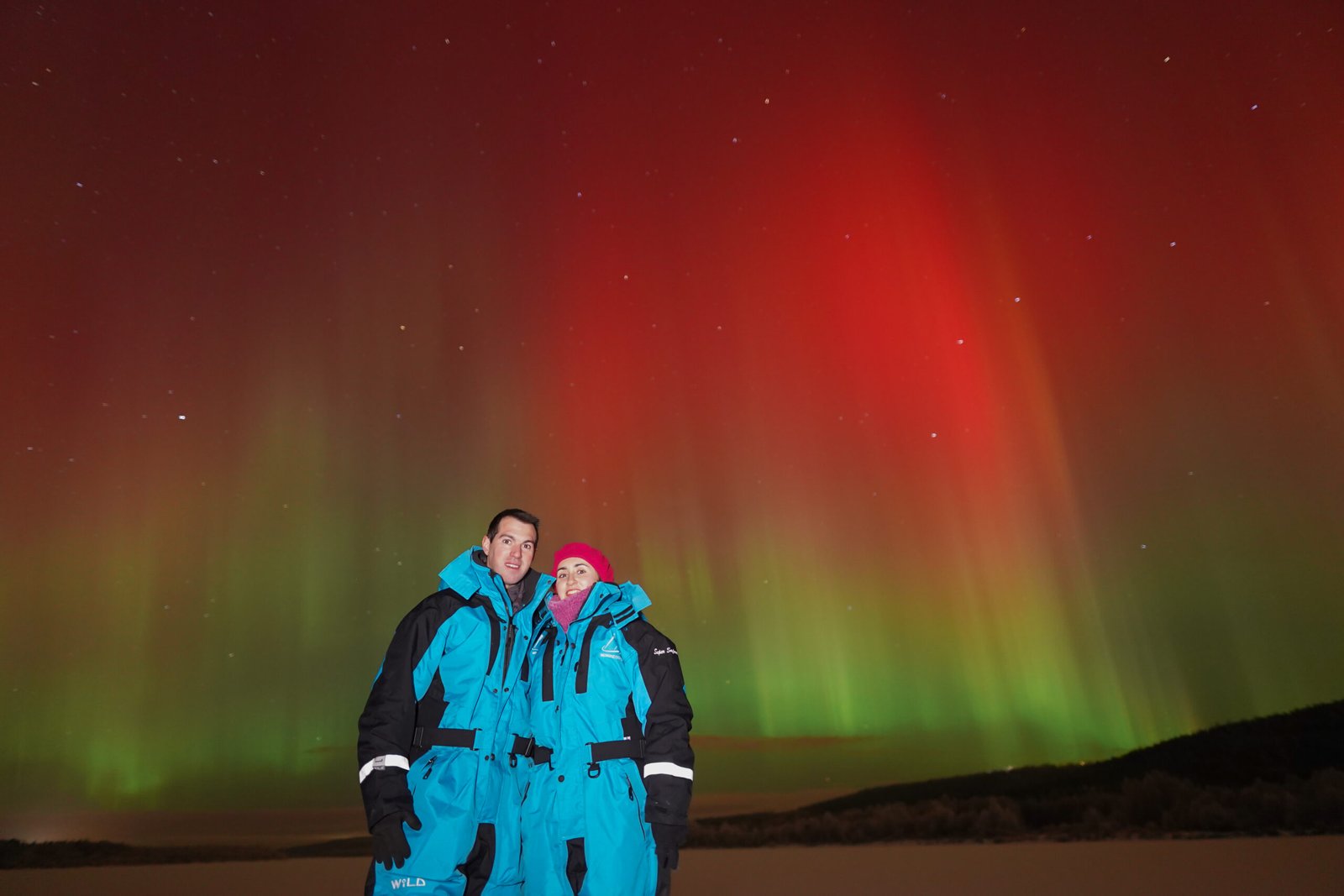
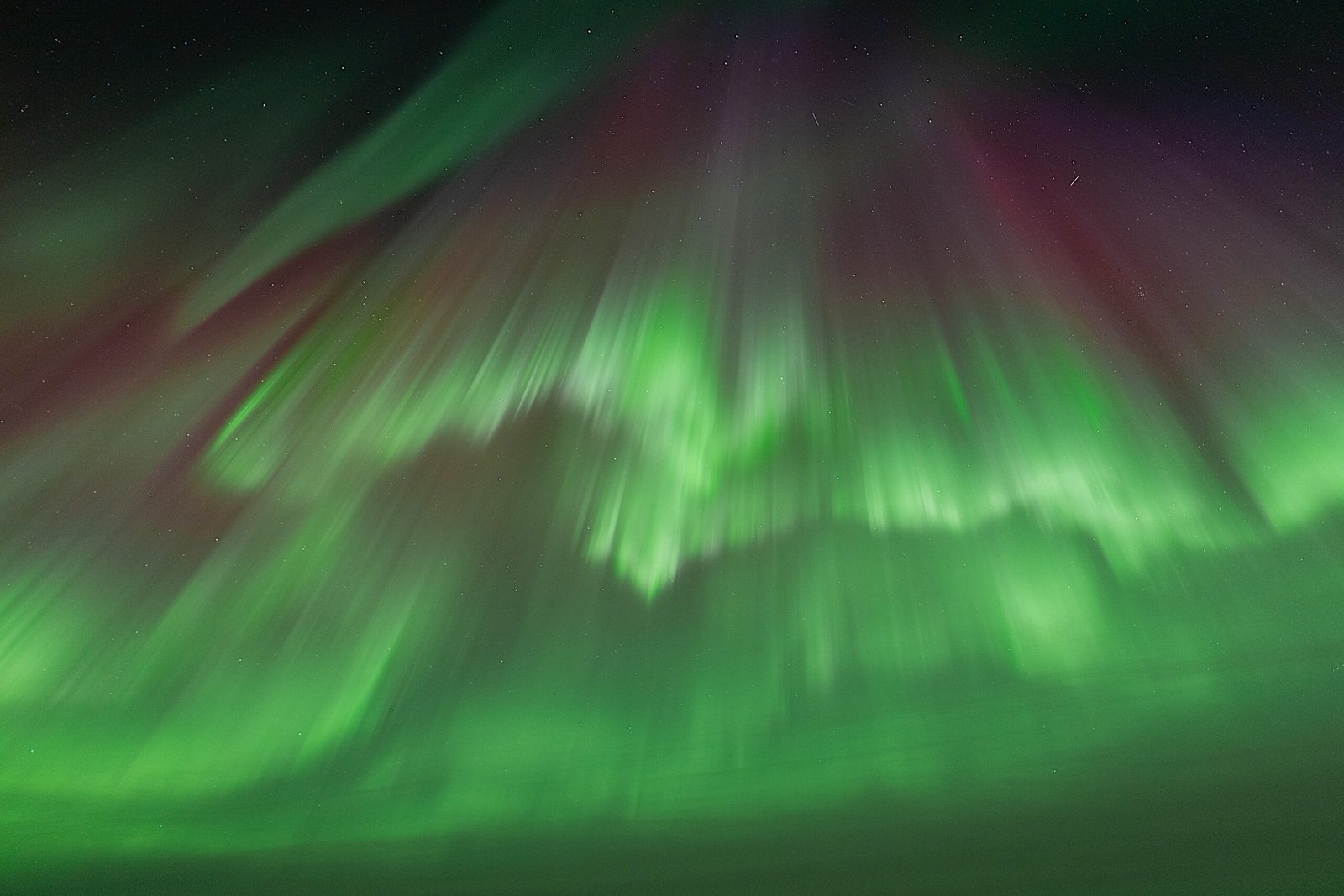
The northern lights, also called the aurora borealis, are natural light phenomena that appear in the night sky as waving veils of green, violet, pink, or sometimes red. They form when solar particles collide with gases in the Earth’s upper atmosphere. These interactions excite oxygen and nitrogen molecules, releasing energy in the form of light.
To learn more about the northern lights phenomenon, try our Aurora Workshop in Rovaniemi.
2. WHERE TO SEE THE NORTHERN LIGHTS?
The northern lights mainly occur within a well-defined area known as the auroral oval — a ring-shaped zone surrounding the Earth’s magnetic poles. This is where auroras are most frequent and intense. The longer you stay within this zone, the higher your chances of seeing them — even during periods of low solar activity.
Finnish Lapland lies beneath or close to the auroral oval, although viewing frequency generally increases farther north. Rovaniemi combines good aurora potential with convenient transport, accommodation and guided experiences.
3. WHAT IS THE BEST TIME TO SEE THE NORTHERN LIGHTS IN LAPLAND?
Auroras occur throughout the year, but they can only be observed when the sky is dark enough. This is why Finnish Lapland has a defined viewing season despite auroral activity continuing during summer. The northern lights season in Lapland runs from late August to early April. However, some periods offer far more favorable conditions than others:
• Late August to October: Beginning of the season, often clear skies, mild temperatures, beautiful reflections on the lakes, especially during ruska, Finland’s colourful autumn foliage season, and often more intense auroral activity due to the equinox effect.
• November to January: Deep winter, very long nights, snowy and magical landscapes — but the weather can be more unpredictable. December in particular tends to be very snowy, which statistically reduces visibility for aurora hunting.
• February: Often clearer skies, dry cold, and excellent conditions for photography.
• March to early April: Daylight hours are longer, but the nights remain sufficiently dark for aurora viewing. Temperatures are often milder than in midwinter, and skies can be favourable.
Best overall period: March and early April. September, October and February are also excellent alternatives. A word of caution: Even in Lapland, seeing the northern lights is never guaranteed. It’s a natural phenomenon and remains unpredictable — even during the best times of year.
Is 2026 a good year for the Northern Lights? Yes, but the year should not be the main factor when planning a trip to Lapland. NASA and NOAA announced that Solar Cycle 25 had entered its maximum phase in October 2024. Solar activity remains capable of producing significant storms during the period following the maximum. However, solar maximum does not create clear skies, and it does not guarantee an aurora on a particular night. At Lapland’s high latitudes, auroras remain common even during quieter parts of the solar cycle. Your travel dates, cloud conditions, location and number of available nights are more important than marketing claims about a supposedly perfect aurora year.
4. CONDITIONS TO SEE THE NORTHERN LIGHTS
In addition to travelling to Lapland at the right time, there are a few essential conditions to increase your chances of witnessing the northern lights:
Enough darkness: The sky must be sufficiently dark. Avoiding artificial light makes faint auroras easier to see, although strong displays can also remain visible near towns or during a full moon. Auroras continue to occur during summer, but the bright Arctic nights usually prevent them from being visible. In practice, Rovaniemi’s viewing season runs from approximately late August until early April.
Does a full moon prevent you from seeing the Northern Lights? No. A full moon does not stop the Northern Lights from appearing, and strong auroras remain clearly visible in moonlight. Bright moonlight can reduce the contrast of a weak aurora and make the surrounding sky appear lighter. On the other hand, it can illuminate snowy landscapes beautifully and improve foreground detail in photographs. There is no need to avoid travelling during a full moon. Clear weather is far more important than the lunar phase.
A Sufficiently Clear Sky: Cloud cover is the most important local factor. Auroras occur far above ordinary weather clouds, so a thick layer of cloud will completely hide them. Check hourly cloud forecasts rather than relying only on a general weather symbol. Conditions can vary considerably within 50–100 kilometres of Rovaniemi, and small openings may move during the evening.
Good solar activity: Strong auroras become more likely when disturbances in the solar wind, such as coronal mass ejections or high-speed streams, interact effectively with Earth’s magnetic field. However, even strong space-weather activity will remain invisible from the ground beneath thick clouds. Even under a dark, clear sky, aurora activity may be weak or too faint to distinguish easily with the naked eye.
Patience, flexibility and a bit of luck!: The aurora borealis is a natural phenomenon, and as such, it can appear — or not — at any time during the night, lasting from just a few seconds to several hours, in various shapes and colours. It often requires waiting patiently in the cold, which is why it’s essential to dress warmly with proper thermal clothing — especially during the freezing nights of deep winter (we offer Arctic-grade clothing rentals here). Being well prepared will help you enjoy the experience to the fullest — and avoid giving up just before the show begins! And if luck is on your side, you’ll witness a truly unforgettable display.
How to Read an Aurora Forecast Correctly? Aurora forecasts can be confusing, especially when they focus only on the Kp index. In reality, cloud cover, darkness and local geomagnetic activity are often more important in Lapland. A high Kp value is useless if the sky is completely cloudy, while auroras can sometimes appear around Rovaniemi even when Kp is low.
For a simpler and more reliable overview, check our Northern Lights forecast for Rovaniemi. It combines regional cloud forecasts, darkness and current space-weather data with an assessment prepared by our local aurora guides.
5. AURORA HUNTING IN ROVANIEMI: GO WITH A PHOTOGRAPHER-GUIDE!
Seeing the Northern Lights is not simply a matter of driving away from the city and waiting. Cloud cover can change quickly, forecasts often disagree, and the clearest sky may be many kilometres from Rovaniemi. Knowing when to leave, which direction to follow and when to move again requires experience and continuous monitoring. To make the most of this magical experience, join a northern lights hunting tour from Rovaniemi with our specialised local agency.
Why choose Nordic Odyssey?
- Expert forecast analysis: We compare several weather models, regional cloud movements and current aurora activity before departure.
- A flexible route: There is no fixed viewing location. Your guide chooses the most promising direction and adapts the plan as conditions change.
- Small groups or private tours: Fewer participants allow greater flexibility, faster decisions and a more personal experience. Explore our small-group Northern Lights photography tour or enjoy maximum flexibility with a private Northern Lights experience.
- Professional photographs included: Enjoy the moment while your guide captures high-quality portraits and aurora images for you.
- Safer Arctic travel: Your experienced driver-guide handles snowy roads, ice, darkness and changing winter conditions.
- Clear explanations: Learn how the aurora forms, how to recognise a weak display and what the forecasts actually mean.
A guide cannot guarantee the Northern Lights, but professional forecasting, mobility and local knowledge can help you make the best possible use of the conditions available that evening.
Staying for several nights? Our Aurora Pass reserves your place across consecutive evenings and provides a daily weather assessment. This gives you several opportunities instead of depending entirely on one night.
6. CONCLUSION: WHEN TO GO TO ROVANIEMI FOR THE NORTHERN LIGHTS?
In summary, if you want to try to see the northern lights in Finnish Lapland:
- Focus on the period from late August to early April, particularly September, October, February and March.
- Avoid light pollution and seek the clearest, most open skies possible.
- If you are in Rovaniemi, check our local Northern Lights forecast before heading outside. To understand the science, forecasts and photography in greater depth, join our Aurora Workshop in Rovaniemi.
- Go with an expert guide to maximise your chances of seeing the northern lights and to get beautiful photos.
FREQUENTLY ASKED QUESTIONS
Can I see the Northern Lights from Rovaniemi city centre?
Strong auroras can sometimes be seen from the city centre, but artificial lighting makes weaker displays more difficult to notice. For a better view, choose a dark location with a wide, unobstructed view of the sky.
Can a Northern Lights tour guarantee a sighting?
No responsible operator can guarantee the Northern Lights because both aurora activity and cloud cover are beyond human control. An experienced guide can monitor the forecasts, select promising locations and adapt the route as conditions change.
How can I check tonight’s Northern Lights forecast for Rovaniemi?
Check our daily Northern Lights forecast for Rovaniemi before heading outside. It combines cloud conditions, darkness and current space-weather information with an assessment from our local aurora guides.
Still have questions? Visit our FAQ page.
plan your LAPLAND holiday
Would you like to make the Northern Lights the highlight of a complete Lapland holiday? We can create a personalised itinerary with several opportunities for aurora viewing, combined with activities such as husky sledding, reindeer encounters, snowshoeing, ice fishing and a traditional Finnish sauna. Your journey can also connect Rovaniemi with other destinations across Lapland, with accommodation, transfers and experiences carefully organised for a seamless escape.
our tours
FULL LIST OF