What to Wear in Lapland at –20°C: The complete Winter Packing Guide
Travelling to Lapland in winter often raises one important question: how do you dress for temperatures around –20°C? The short answer is to wear several loose, breathable layers, protect every exposed part of your body and adjust your clothing to the activity. You will need more insulation while waiting for the Northern Lights than while snowshoeing or cross-country skiing.
Temperatures in Finnish Lapland vary throughout winter. According to Visit Finland, the regional winter average is approximately –14°C, while colder periods can bring temperatures below –30°C. Wind can make the conditions feel significantly colder, so always check the local forecast before leaving your accommodation. This guide explains exactly what to pack, what you can rent locally and how to stay comfortable during your Arctic adventure.
Updated on 26 August 2026 by the Nordic Odyssey team.
1. LAYER UP FOR MAXIMUM WARMTH
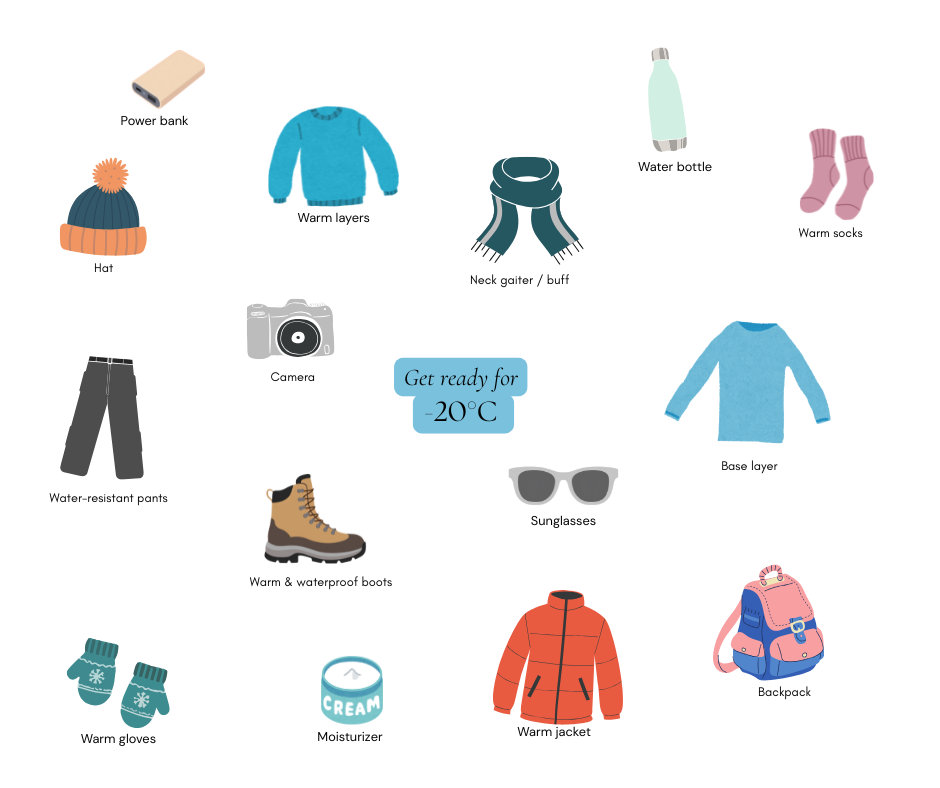
A reliable winter outfit consists of three main layers. Layering allows you to adjust your warmth depending on the activity and the weather. You can add or remove layers to stay comfortable whether you’re moving or standing still. Your clothing should feel comfortable and slightly loose. Tight layers, compressed socks and boots without enough space reduce the amount of insulating air around your body.
Start with a moisture-wicking base layer:
Your base layer sits directly against your skin. Its purpose is not simply to feel warm but to move moisture away from your body. Choose:
-
merino wool;
-
synthetic thermal fabric;
-
a long-sleeved thermal top;
-
thermal leggings or long underwear.
Avoid cotton during long outdoor activities. Cotton absorbs moisture and dries slowly, which can leave you feeling cold when you stop moving.
Add an insulting middle layer:
The middle layer traps warm air around your body. Fleece, wool and insulated jackets all work well. A practical combination for –20°C is:
-
a fleece or wool sweater;
-
insulated trousers or fleece pants;
-
an additional lightweight down or synthetic jacket when necessary.
Your ideal insulation depends on your activity. Snowshoeing, skiing and winter hiking generate body heat, so wearing too much can make you sweat. Reindeer sleigh rides, husky safaris, snowmobiling and Northern Lights tours involve less movement and require more insulation. It is better to carry one removable layer than to start an active excursion wearing everything you own.
Finnish with a windproof outer layer:
Waterproof and windproof jackets and pants protect against snow, wind, and icy rain.
2. PROTECT YOUR EXTREMITIES
Your hands, feet, and head are the first to feel the cold, and even with the best clothing, they may get chilly at some point. Here’s how to keep them as warm as possible:
Choose gloves or mittens:
Mittens are generally warmer than gloves because your fingers share heat inside the same space. For very cold conditions, use:
-
thin liner gloves for handling a camera or telephone;
-
insulated mittens over the liners;
-
long cuffs that cover the ends of your sleeves.
Do not handle cold metal with bare hands. Tripods, vehicle parts and other metal surfaces can become extremely cold.
Keep your feet warm:
Cold feet can quickly make an otherwise enjoyable excursion uncomfortable. The most important elements are dry socks, insulated boots and enough space for your toes. Wear:
-
one pair of wool or technical winter socks;
-
insulated, water-resistant winter boots;
-
removable boot liners when available.
Avoid squeezing several thick pairs of socks into tight boots. Compression reduces the insulating air around your feet and can restrict circulation. If your boots already fit closely, one good pair of wool socks may be warmer than two thick pairs. Your toes should be able to move freely. Change your socks if they become damp and carry a spare pair during longer excursions. Remove snow from your boots before entering a heated building and allow the boots and liners to dry completely overnight.
Protect your head, neck &face:
A warm hat should cover your ears completely. Add a neck gaiter, scarf or balaclava to protect your neck, cheeks and chin. During windy or extremely cold conditions, avoid leaving skin exposed. A hood provides an additional barrier against wind and helps retain warmth around your head.
A neck gaiter is usually more practical than a long scarf during active excursions because it stays in place and is less likely to catch on equipment. If the material covering your mouth becomes wet from your breath, replace it with a dry one when possible.
3. ELECTRONICS AND OTHER USEFULL ACCESSORIES
Cold temperatures reduce battery performance. A phone or camera may lose power quickly outdoors even when the battery indicator previously showed a good charge. To protect your equipment keep spare batteries close to your body, carry a charged power bank; use touchscreen-compatible liner gloves AND place cold equipment inside a closed bag before returning indoors.
Other essentials to protect yourself from the elements include:
- Sunglasses or Goggles: Snow reflects sunlight strongly, which can be harsh on your eyes. Protective eyewear is highly recommended.
- Moisturizer and Lip Balm: Cold, dry air can quickly dry out your skin and lips. Avoid products with water content in freezing temperatures, as they may irritate your skin or be less effective.
- Hair Care: Never go outside with wet hair. At -25°C it can freeze instantly, and even in slightly warmer conditions, wet hair or clothing increases the risk of getting cold or sick.
4. DRESS ACCORDING TO YOUR ACTIVITIES
There is no single outfit that works perfectly for every Arctic experience. The amount of movement makes a major difference.
- Husky and reindeer ride: These activities usually involve limited movement, particularly while sitting in a sleigh. Dress more warmly than you would for a walk. Pay special attention to your feet, hands and face. Use the thermal overalls supplied by the operator when included.
-
Snowmobiling: Wind created by the movement of the snowmobile can make the temperature feel considerably colder. Wear complete face and neck protection beneath the helmet, following the operator’s instructions.Thermal overalls, boots, gloves and helmets are commonly provided, but inclusions vary between companies.
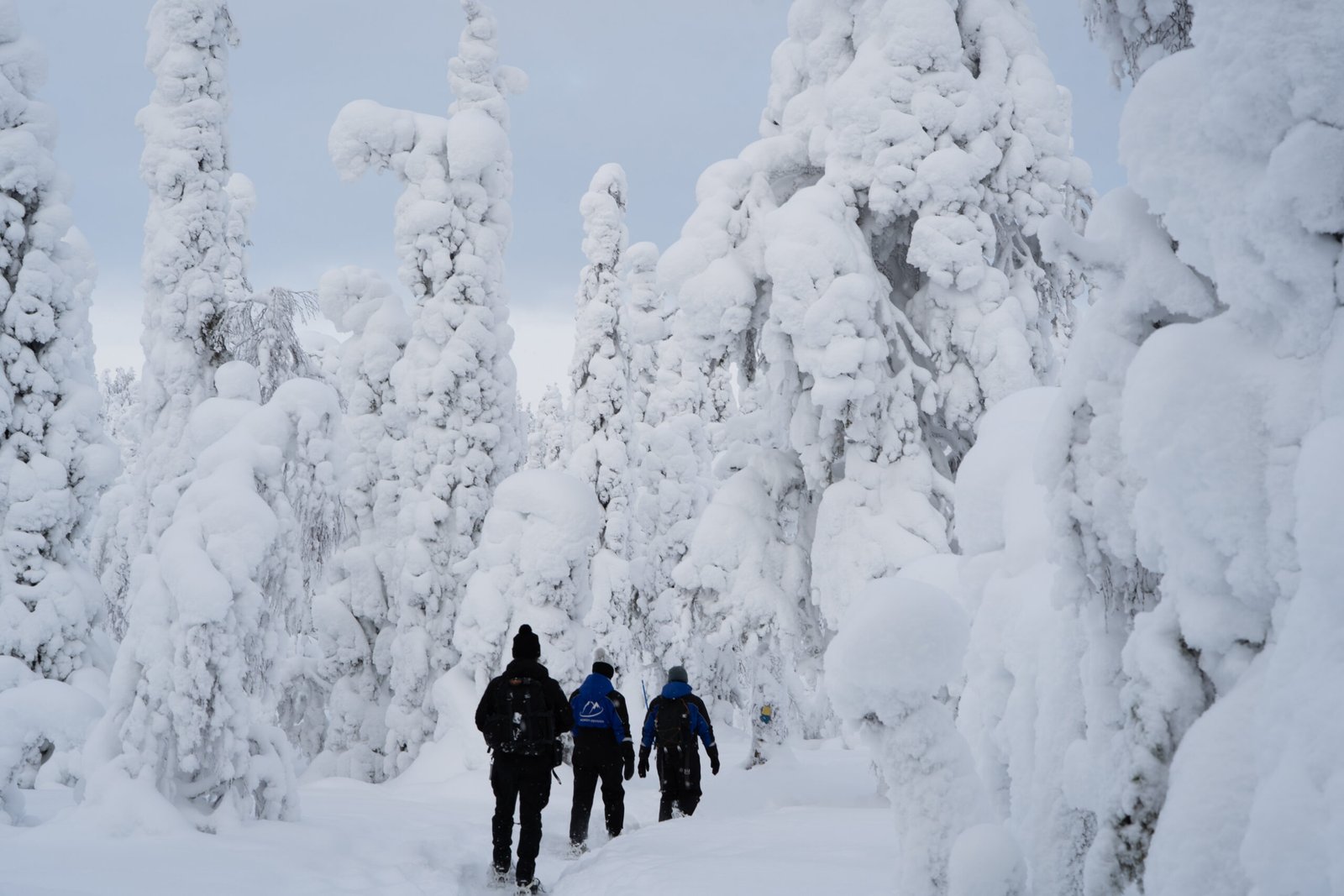
- Active nature activities, such as snowshoeing, skiing: These activities generate heat quickly. Start feeling comfortably cool rather than excessively warm. Use breathable layers and open your jacket or remove a middle layer before you begin sweating heavily. Carry the removed layer in your backpack so you can put it on during breaks.
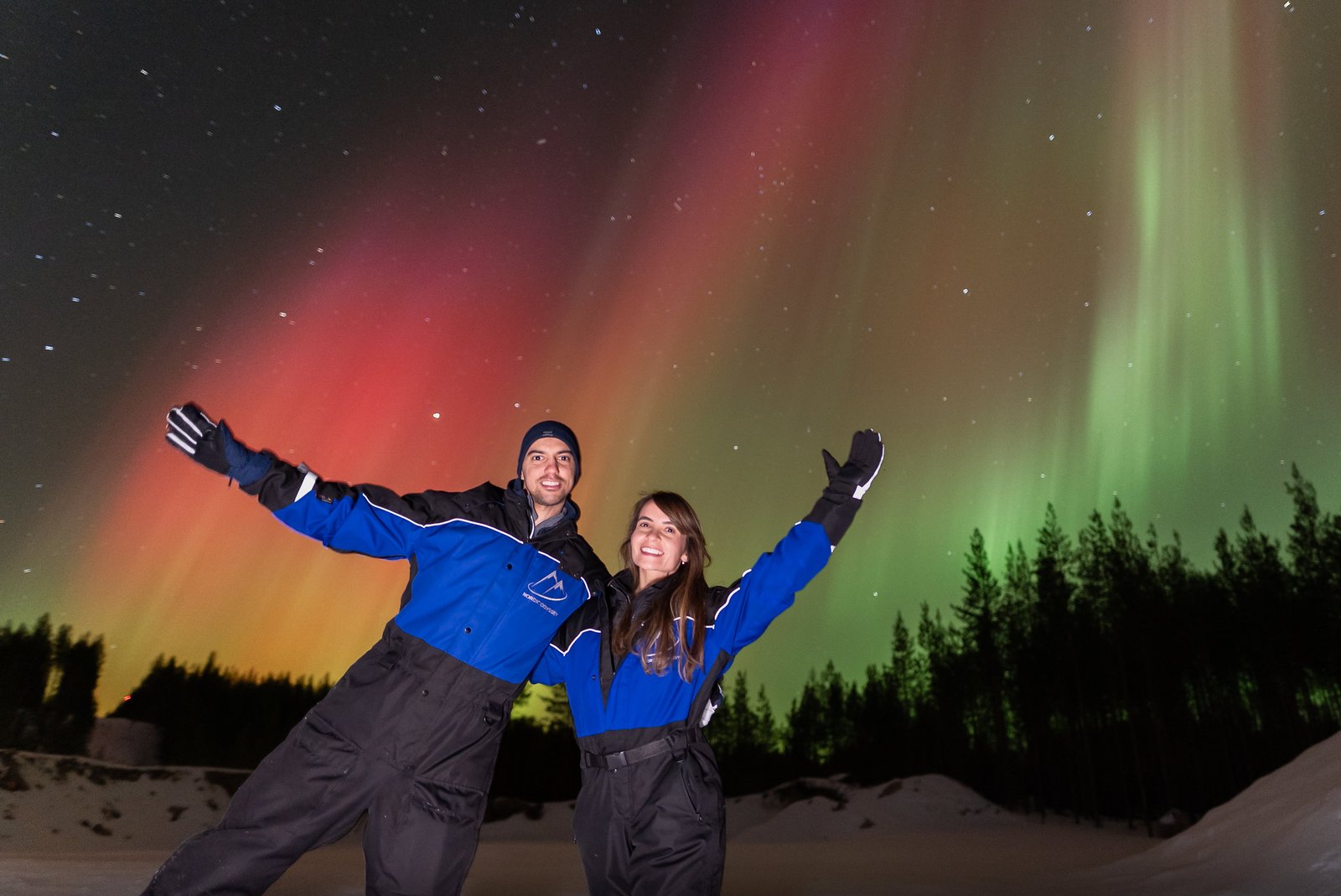
- Northern Lights Chasing: Expect to stand still for extended periods. Dress extra warmly with layered clothing to stay cozy.
- Dressing in the city: Choose layers that are easy to remove when entering shops, cafés and museums. Remaining fully dressed indoors can cause overheating and moisture, making you feel colder when you return outside.
A forecast of –20°C does not describe the entire day. Temperatures can change between morning and evening, and wind can transform how the conditions feel. Before each excursion, check the actual temperature, snowfall, how much time you will spend standing still and whether warm shelters or vehicles are available.
At around –5°C, overheating and damp clothing may be a greater concern during active excursions. At –20°C, insulation and protection from the wind become increasingly important. During colder conditions, shorten outdoor periods and take regular warming breaks. Always follow local weather warnings and the instructions given by your guide.
5. SMART PACKING AND LOCAL RENTALS
A successful Arctic trip is not just about what you bring, but also about how intelligently you combine your own clothing with gear available locally. In destinations such as Lapland, many tour operators and rental shops provide high-quality winter equipment designed specifically for extreme cold, which can significantly reduce the amount of bulky clothing you need to pack.
The most efficient approach is to pack light, focusing on your personal and close-fitting items such as base layers, socks, and thermal underwear, while renting heavy outerwear on arrival. Insulated suits, winter boots, and thick mittens are often included in activity packages or available for rent, and they are specifically engineered to handle long exposure to –20°C or lower. This ensures you stay warm without needing to invest in expensive gear you may only use once.
Smart packing also means thinking in terms of flexibility rather than quantity. Instead of bringing multiple heavy outfits, it is better to rely on a simple layering system that can be adjusted throughout the day. Locally rented gear can then act as your protective outer shell, while your personal layers manage comfort and temperature regulation underneath.
Travelling lighter with winter clothing rental: Preparing for Arctic temperatures does not mean filling your luggage with bulky equipment. Bring your personal thermal layers and rent your winter jacket, trousers, boots or complete clothing set after arriving in Rovaniemi. Nordic Odyssey offers winter clothing and footwear suitable for Arctic conditions, subject to size and availability. Reserve your equipment in advance so it is ready when your adventure begins.
6. COMMON PACKING MISTAKES
Wearing too much during an active excursion: Overdressing can cause sweating. Slow down, open your jacket or remove a layer before your clothing becomes damp.
Wearing cotton next to the skin: Cotton retains moisture and dries slowly. Choose wool or technical fabric for your base layer.
Wearing boots that are too tight: Tight boots compress socks and reduce insulating space. Your toes should be able to move.
Assuming every tour includes winter clothing: Equipment varies between providers. Read the activity description and ask before arrival.
Packing only one pair of gloves: Gloves and mittens can become damp. Carry a dry spare pair on longer days.
Going outdoors with wet hair or damp clothing: Wet hair does not cause an infection, but moisture increases heat loss and can make you cold more quickly. Dry your hair and clothing before going outside.
Ignoring the wind: Temperature alone does not describe the conditions. Always check the wind chill and cover exposed skin.
FREQUENTLY ASKED QUESTIONS
How many layers should I wear at –20°C?
Most travellers need three principal layers: a moisture-wicking base layer, an insulating middle layer and a windproof outer layer. You may need an additional insulating layer for stationary activities.
Are jeans suitable for Lapland in winter?
Jeans are not recommended as your only trousers during prolonged outdoor exposure. They provide limited insulation and become uncomfortable if wet. Wear thermal leggings with insulated or windproof winter trousers instead.
Still have questions? Visit our FAQ page.
FINAL ADVICE BEFORE HEADING OUTSIDE
At –20°C, good preparation makes the difference between enduring the cold and enjoying it. Wear loose layers, stay dry, protect your hands, feet and face, and adjust your clothing before you begin sweating. Check the weather and wind chill, follow your guide’s advice and take warming breaks whenever necessary.
With the right equipment, the cold becomes part of the experience!
OUR ACTIVITIES
FULL LIST OF